




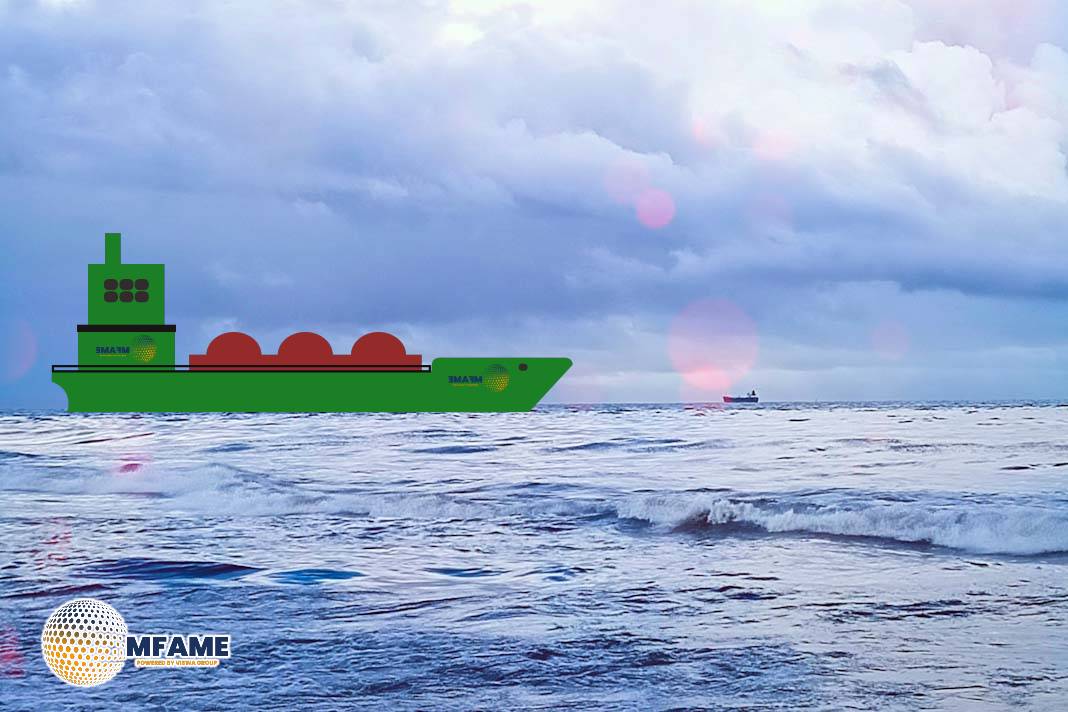
 Lloyd’s Register (LR), EXMAR and Belgium’s Federal Public Service (FPS) for Mobility and Transport have jointly played a pivotal role in shaping new interim international guidelines that permit the safe use of ammonia cargo as fuel on gas carriers. This development marks a major regulatory shift, unlocking new possibilities for ammonia a zero-carbon fuel candidate in maritime decarbonisation efforts.
Collaborative Work Leads to Regulatory Breakthrough
The Belgium FPS, supported by LR and EXMAR, initiated efforts more than two years ago to amend the IGC Code, which had previously prohibited the use of ammonia cargo as fuel. Their work helped secure a crucial amendment removing these restrictions and providing a pathway for safe onboard consumption of ammonia by gas carriers.
The trio drafted the first version of the Interim Guidelines and submitted it to the IMO Correspondence Group. Extensive consultation with Member States followed, ensuring consensus on safety requirements, design flexibility and operational standards.
The guidelines were finalised at the IMO’s CCC 11 meeting and are expected to be formally approved at MSC 111 in May 2026. This regulatory milestone now enables shipowners to advance ammonia-fuelled vessel designs under a recognised and safe framework.
Ammonia as a Zero-Carbon Fuel: Industry Momentum Builds
Ammonia has long been viewed as a promising zero-carbon alternative fuel, yet restrictions under the IGC Code limited its practical adoption. The new guidelines provide clarity for shipowners wishing to use their own ammonia cargo as fuel a step particularly important for companies like EXMAR, which began exploring ammonia propulsion as early as 2021.
Industry leaders highlighted the significance of the achievement:
-
LR emphasised how regulatory collaboration can accelerate decarbonisation and confirmed its continued role in supporting ammonia-fuelled projects.
-
EXMAR noted that the approval aligns with its long-term strategy, advancing from LPG to ammonia propulsion with potential CO₂ reductions of up to 90%.
-
Belgium’s FPS Mobility reiterated its commitment to enabling alternative fuel adoption as part of national decarbonisation priorities.
In parallel, Lloyd’s Register continues to consolidate research in its Fuel for Thought: Ammonia report—an information hub covering safety, supply chains, policy trends and technology readiness for ammonia as marine fuel.
The development of interim IMO guidelines represents a significant step toward mainstream adoption of ammonia as a marine fuel. With industry, regulators and national authorities working in partnership, gas carriers can now pursue ammonia propulsion under an established safety framework. As the maritime sector accelerates its energy transition, this milestone strengthens the foundation for cleaner, zero-carbon operations in the years ahead.
Did you subscribe to our daily Newsletter?
It’s Free — Click here to Subscribe!
Source: LR